
Chess notation cheat-sheet (for new readers)
Pieces: K king · Q queen · R rook · B bishop · N knight · (a pawn move has no letter)
Actions: x takes · + check · # mate · O-O short castles · O-O-O long castles · e8=Q pawn promotes to queen
Annotations: ! good move · !! brilliant · ? mistake · ?? blunder
Why taking the guard wins the piece behind it
Remove the piece that protects a target and the target is suddenly loose, free for the next capture. That is the one idea every puzzle below is built on, so your job at the board is to stop staring at the loose piece and start asking what holds it up. Find the protector, take it, and the piece it was guarding falls on the following move.
One spotting cue saves time here. If you can take the guard outright, take it; the math is clean and no setup move is needed. If the guard is too well placed to capture, that points to deflection instead, where you force the guard off its square rather than off the board. The trainer mixes both, so telling them apart fast is part of the work.
Reading the defense chain before you capture
Find the target first. Scan for a piece, a key square, or a back-rank weakness that one of your pieces would reach if it were not guarded. Then trace back to whatever defends it.
Count the guards, not just the first one. A rook may be held by a knight and a pawn at once. Taking one still leaves a second, so read the full chain before you commit. The classic pattern trades queens with Qxd8 (your queen takes the enemy queen on d8) to peel away a knight's only protector, then wins the now-loose piece.
Watch for chains that collapse together. Some captures undermine two targets in one move, like Nxc6 (knight takes the piece on c6) bxc6 (the b-pawn recaptures on c6) leaving both an undefended bishop and a weak pawn. The trainer earns its keep when you set the rating near your own level, around a 75 percent solve rate: the verified positions from real games force you to read the whole chain instead of grabbing the first thing that looks free. That is the habit I drill on it most.
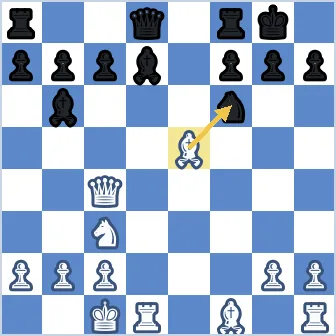
Capture, then count: making the follow-up land
Taking the defender is only half the puzzle. The points come from the move after, the one that scoops up the exposed piece or mates a stripped king. Most missed material on these positions comes from capturing the guard and then forgetting to cash in, which lets the opponent recapture or slot in a fresh defender.
So count before you play the capture. Ask what the reply will be: recapture, defend again, or hit back with a check or threat of their own. If a forcing answer resets the defense, the tactic is not ready and an in-between move may be needed first. When the target sits in a mating net, stripping one guard off the mating square can be the whole point. Read the position to the end of the sequence, capture plus the landing move, and the solve rate on this motif climbs.